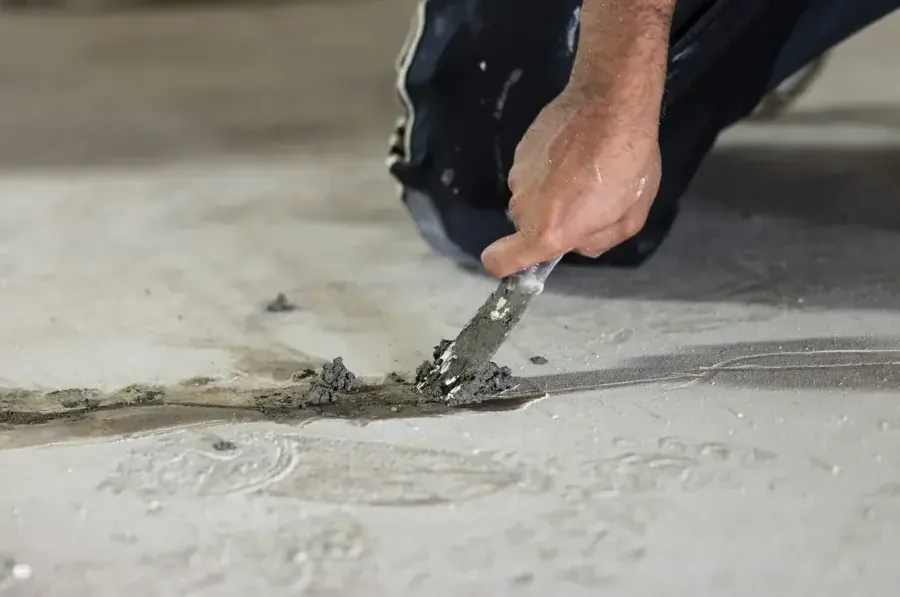
A slab leak is a pressure leak in a supply pipe that runs under or through the concrete floor of a home. In a community built on concrete slabs, it can run for weeks before anyone sees water.
Key takeaways
- A slab leak usually announces itself through small changes: a warm patch of floor, a water meter that moves when nothing is running, or flooring that starts to lift.
- Clay, sandy loam and adobe soils shift and expand with seasonal moisture, and seismic activity can loosen plumbing set in the slab.
- Hard water is a well-known issue in Ladera Ranch, which can add wear to metal supply pipes over time.
- Shutting off the main water valve stops the supply while the source is traced.
- Wet flooring is lifted and the concrete is dried with air movers and dehumidifiers before anything new goes down.
What a slab leak is and why it stays hidden
In a slab-on-grade home, some supply pipes run through or beneath the concrete floor.
When one of those pipes develops a pinhole or a failed joint, pressurized water escapes into the soil and the concrete instead of a wall cavity.
Because the water has nowhere obvious to go, it spreads sideways under the slab until it finds a crack, a seam or a spot where flooring meets a wall. That is often the first visible sign.
Homes in the nine villages of the community, from Oak Knoll Village to gated Covenant Hills, were built from 1999 onward on portions of a former cattle ranch. The age of any single home still matters less than the conditions around its pipes.
Warning signs inside the home
Most owners notice one or two quiet clues long before a floor is soaked.
A slab leak water damage call often starts with one of these observations:
None of these signs proves a slab leak on its own. Together, though, they point to a problem worth testing.
- A warm spot on a tile, stone or wood floor, especially where a hot water pipe runs underneath.
- A water meter that keeps moving after every faucet, appliance and irrigation system is off.
- The sound of running water in a quiet house when nothing is turned on.
- Cracked grout, tile that sounds hollow or laminate and wood planks that cup or lift.
- A musty smell near baseboards or a damp edge where carpet meets a wall.
- Water bills that climb without any change in how the household uses water.
Why soil and shaking matter in this part of Orange County
Local soils include clay, sandy loam and adobe. These soils swell when they take on seasonal moisture and shrink as they dry.
That slow movement can put steady stress on pipes that are cast into or run beneath the slab.
Seismic activity adds another factor. Small shifts can loosen fittings or rub a pipe against concrete or gravel, and the resulting weak point may leak long after the event.
Hard water and aging pipe
Hard water is a well-known issue in Ladera Ranch. Mineral content can build up inside fittings and speed up wear in metal supply pipes.
A pinhole in a copper pipe under a slab behaves the same as one in a wall, except that the water is out of sight.
Drought and dry soil
Dry stretches pull moisture out of clay soils, which can leave small gaps around a slab or pipe. When rain returns, the same soils swell again.
That back and forth is part of why plumbing problems can appear after a seasonal change.
First steps when a slab leak is suspected
Stopping the water supply is the first move, before any investigation.
Once the supply is off, the household can keep a few simple records for the plumber and the restoration team.
Avoid drilling or cutting the slab before a leak detection visit. Guesswork can damage pipes or electrical conduit that run in the concrete.
- Shut off the main water valve for the house.
- Check the meter to see whether it stops moving.
- Photograph warm spots, lifting flooring and any damp baseboards.
- Move rugs, furniture and electronics away from wet areas.
- Keep wet materials in place until the team has taken readings.
How the drying team handles a slab leak
A leak under concrete has two jobs: finding and repairing the pipe, and drying everything the water touched.
The plumber handles the repair. The restoration team handles extraction and moisture control, and the two steps are timed so drying does not start until the supply is stopped.
Mapping the moisture
Moisture meters and a thermal camera show where water has traveled across the floor and into the bottom of walls.
The map decides which rooms need equipment and which flooring can stay.
Lifting wet flooring
Carpet, pad, laminate and glued-down wood often have to come up so the concrete can release moisture.
Tile may stay if readings are low, though the grout lines are watched closely.
Drying the concrete
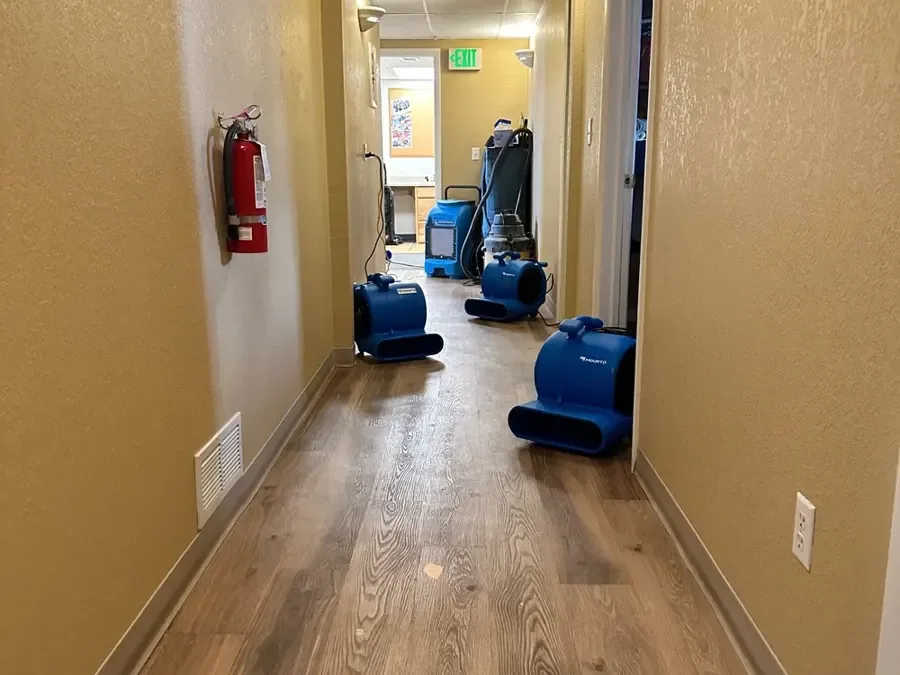
Air movers push moving air across the surface while dehumidifiers pull moisture out of the room. Concrete dries slowly, so readings are repeated until the slab and the base of the walls reach normal levels.
The structural drying process is documented day by day, which helps with an insurance claim.
Why the 24 to 48 hour window matters
Wet baseboards, carpet pad and drywall edges can start to grow mold within 24 to 48 hours. A slab leak that has run for weeks has often passed that point already, so removal of soaked porous material may be needed.
Owners who want a quick check can use the slab leak warning check before calling a plumber. It does not replace a leak detection visit, but it helps organize what has been seen.
When surface water joins the problem
Some slab leaks show up as water pooling on a floor or in a garage corner. In that case the crew may also need water extraction before drying starts.
Clean water from a supply pipe is easier to handle than runoff or sewage, but long-running leaks can bring soil and debris with them.
Questions
How can a homeowner tell a slab leak from a leaking roof?
A slab leak usually shows at floor level: warm spots, wet baseboards, lifting flooring and a moving water meter. A roof leak shows on ceilings and walls, often after rain.
Does soil movement cause slab leaks?
It can contribute. Clay, sandy loam and adobe soils shift with seasonal moisture, and that movement puts stress on pipes that run through or under a slab.
Should the water be shut off right away?
Yes. Closing the main valve stops the supply while the leak is traced. Fixtures can be turned back on once the pipe is repaired.
Can wood flooring over a slab be saved?
Sometimes. Readings decide whether boards can be dried in place or must be lifted. Glued-down wood often has to come up.
Who repairs the pipe and who dries the home?
A plumber repairs or reroutes the pipe. The restoration team extracts water, lifts wet materials and dries the structure.