Structural Drying and Dehumidification in Ladera Ranch, CA
Water that soaks into framing, drywall and concrete stays long after the floor looks dry. The drying team sets air movers and LGR dehumidifiers to the class of loss and reads every wet material daily until it matches a dry reference.
(888) 450-9281Floor dry but walls still damp? Call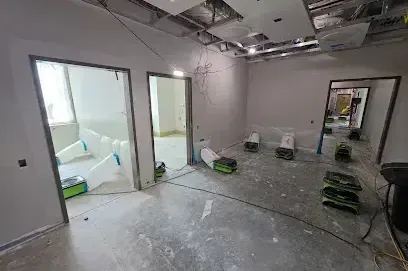
How structural drying and dehumidification work is held to a standard
Dispatch around the clock
Active water is treated as urgent at any hour, weekends and holidays included, because every hour it sits it wicks higher into drywall and deeper into the slab.
Dried to IICRC S500
Air movers and LGR dehumidifiers are sized to the class of loss, and the equipment stays until wet materials read within 2 to 4 points of a dry reference.
A claim file built as it goes
Timestamped photos before any demolition, a moisture map, daily psychrometric logs and a line-item scope, organized the way an adjuster reads them.
Built for slab and stucco homes
Slab floors hide water under tile, stucco walls hold it in the bottom plate and upstairs baths drop it into the ceiling below. The meters go there first.
What to do right now about structural drying and dehumidification
- Leave the equipment running. Air movers and dehumidifiers work around the clock; switching them off slows everything.
- Keep doors and windows closed. The containment holds dry air in and damp air out.
- Leave the reading marks alone. The tech compares the same marked spots every day.
- Report a stopped unit. Most units pump out on their own; call if one quits.
What does structural drying and dehumidification cost in Ladera Ranch, CA?
In Ladera Ranch, CA, structural drying typically runs $1,500 to $10,000, depending on the class of loss, how many rooms and floors are wet, whether desiccant units are needed and how many days the equipment runs.
One or two rooms
- Class 1 or 2
- Air movers and LGR
- Daily logs
Several rooms
- Class 3
- Containment
- Wall cavity drying
Dense materials
- Class 4, slab or hardwood
- Desiccant units
- Extended drying
What the claim file holds
Ranges are typical, not a quote: the water category, square footage, material class and how fast drying started move the number most. The file holds a moisture map, daily psychrometric logs, timestamped photos taken before demolition and a line-item scope. Sudden and accidental water is treated differently from flood, so check your own policy. For a closer range, run the water damage cost calculator.
How structural drying and dehumidification is handled, start to finish
Map
Moisture map and dry reference.
Set
Air movers and dehumidifiers sized to the class.
Log
Daily psychrometric readings.
Verify
Equipment out at 2 to 4 points of dry.
Structural drying is what happens after the visible water is gone. Drywall wicks water up from the bottom plate, framing absorbs it and a concrete slab holds it for days. The IICRC S500 standard sets how drying equipment is sized and when a structure counts as dry, so the job ends on readings rather than on a guess.
How structural drying equipment is sized
The class of loss, from 1 to 4, describes how much water the materials absorbed and how hard they are to dry. It sets how many air movers go along each wet wall and how much dehumidifier capacity the room needs. Dense materials like hardwood and concrete are Class 4 and may need desiccant units. The USDA Forest Products Laboratory covers how wood holds and releases moisture.
What gets measured every day
- Temperature and relative humidity inside the containment and outside it
- Grains per pound, the actual water in the air, to show the dehumidifiers are working
- Pin and pinless readings at the same marked spots on walls, floors and framing
- A dry reference: the same material in an unaffected room
When the drying equipment comes out
Equipment stays until wet materials read within 2 to 4 points of the dry reference, not until the room feels dry. Pulling it early leaves water in wall bottoms and the slab, and those daily logs are also what an adjuster reads. For flood events that start outside, Ready.gov flood safety lists the checks to make before going back in. For losses that start with standing water, see water extraction.
Structural drying and dehumidification across Ladera Ranch and the foothills
Coverage runs through all nine villages in ZIP 92694, from Oak Knoll, Bridgepark and Flintridge near Crown Valley Parkway to Township, Wycliffe, Echo Ridge, Avendale, Terramor and the gated Covenant Hills off Antonio Parkway.
Nearby coverage reaches Las Flores, Coto de Caza, Rancho Santa Margarita, Rancho Mission Viejo, Sendero, San Juan Capistrano, Mission Viejo, San Clemente.
See every village and nearby community covered ›Related water damage services
Structural Drying and Dehumidification questions, answered
Still dealing with it?
Walls still reading wet? The drying team sets and logs equipment 24/7.
(888) 450-9281 Get the drying equipment sized rightWhat is structural drying?
Drying the building itself, framing, drywall, subfloor and slab, rather than just the surfaces. It uses air movers, dehumidifiers and daily readings to reach a dry reference.
Why can't a household fan and dehumidifier do structural drying?
Household units move too little air and pull too little water for a soaked wall or slab, and they leave no readings to prove the structure is dry.
What is an LGR dehumidifier?
A low grain refrigerant dehumidifier that keeps pulling water out of the air at lower humidity than a household unit, which speeds drying of dense materials.
How long does structural drying take?
Three to seven days for most losses. Hardwood, concrete and Class 4 losses can run longer.
Why does the drying equipment run day and night?
Drying depends on steady dry air moving across wet materials. Turning units off lets humidity climb back up and slows everything.
Is structural drying covered by insurance?
It is usually part of the mitigation on a covered loss. Coverage depends on the cause and your policy, so check your own.
Damp walls days after the leak? Get structural drying in place.
Water hides in wall bottoms, framing and the slab after the floor looks dry. The drying team reads and dries until the numbers say done.
(888) 450-9281Set the dehumidifiers and start the logs