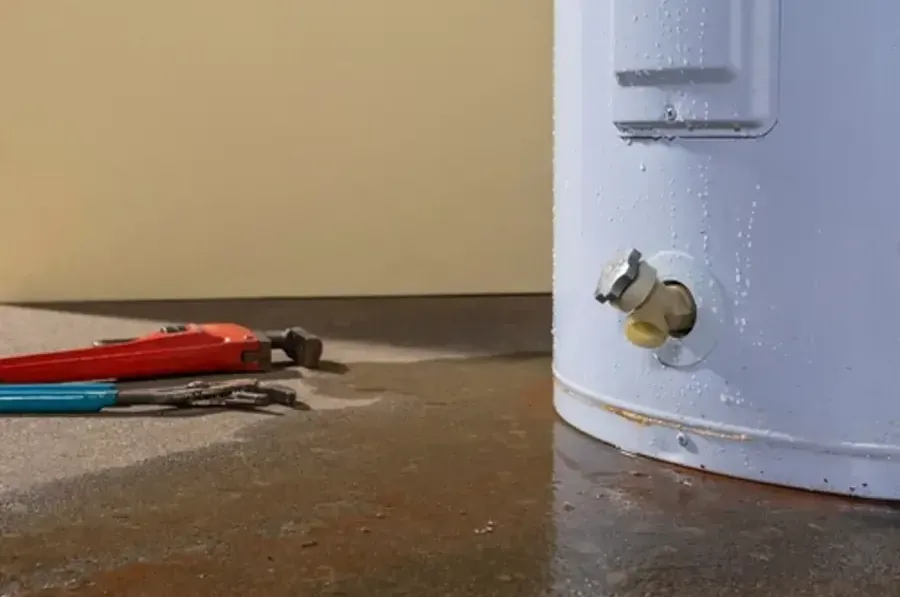
A water heater tank holds enough water to soak a garage floor or a utility closet quickly. When a tank fails, cleanup and replacement are two separate jobs, and replacement involves a permit.
Key takeaways
- A leaking tank is replaced, not patched, and replacing a water heater needs a permit.
- Ladera Ranch is unincorporated, so permits come through OC Development Services of Orange County.
- A water heater permit includes a Plumbing Final inspection after the new unit is installed.
- Garage tanks spread water across a concrete floor, while closet tanks send water into walls and cabinets.
- Extraction happens before drywall, cabinets and stored belongings soak through.
Why a leaking tank means replacement
A steel tank wears out from the inside. Once the tank wall has leaked, no repair makes it dependable again.
A leaking fitting or valve can sometimes be replaced, but a leak at the tank body means a new unit.
Many leaks begin as a slow weep that evaporates before anyone sees it. Rust stains on the floor are a clue that the tank has been leaking for some time.
- Water pooling around the base of the tank.
- Rust streaks or dampness along the lower seam.
- A tank that rumbles or ticks louder than normal.
- Rusty or cloudy hot water at the tap.
The permit and the Plumbing Final inspection
Ladera Ranch is an unincorporated community governed by the Orange County Board of Supervisors. Permits in unincorporated areas come from OC Development Services.
A water heater permit has a Plumbing Final inspection once the new tank is in place. That inspection is the step that closes the permit.
A permit also gives the owner a record that the work was done to standard. That record can matter when a home is sold or when an insurer reviews a claim.
Who handles the permit
The installing plumber normally pulls the permit. Homeowners can ask for a copy to keep with the repair records.
Why cleanup comes first
Wet flooring, cabinets and drywall cannot wait for the replacement schedule. Extraction and drying begin as soon as the water supply to the tank is shut off.
Moving fast does not skip the permit. The two jobs run side by side.
What the inspection looks at
The inspector checks that the new unit is installed correctly and that the connections, valves and venting are in order.
If something fails, the plumber fixes it and the inspection is repeated.
Garage tanks and closet tanks fail differently
A tank in a garage sits on a concrete floor, so a leak spreads outward in a thin sheet and reaches stored boxes, shelving and the wall base.
A tank in an interior closet sends water into framing and the next room, where it wets drywall, flooring and cabinets.
Either way, the leak is rarely only a floor problem. Cabinets, drywall and stored contents take on water fast.
- Cardboard storage soaks up water fast and should be moved.
- Baseboards and the bottom of drywall wick moisture upward.
- Closet floors and adjoining rooms may need moisture readings.
- Water can pass under a door into a hallway or laundry room.
What the response team does first
The team starts by confirming that the tank supply and power are off. Standing water is then removed with pumps or wet vacuums as part of water heater leak cleanup.
After extraction, wet baseboards, drywall and insulation are checked and opened where readings show water has gone in.
Items stored near the tank are sorted as the water is removed. Anything that can be dried is moved to a dry room, and anything that cannot is photographed before disposal.
Documenting for the claim
Photos of the tank, the floor and any damaged items help the claim. The tank itself is worth keeping until the adjuster has seen it.
Items that can be saved
Plastic bins, tools and many hard items can be dried and kept. Cardboard, paper and soft goods are usually lost.
Hidden water behind walls and cabinets
Water from a tank that leaked in a closet can run behind walls and under cabinets. Moisture meters show whether wet spots remain after the surface looks dry.
Opening a small section of drywall lets the team see the cavity and place drying equipment.
Shutting down the tank safely
Before cleanup begins, the tank has to be made safe. Hot water and electricity do not mix with a wet floor.
A few steps reduce risk:
- Turn off the power or gas supply to the water heater.
- Close the cold water valve above the tank.
- Open a hot water tap in the house to relieve pressure.
- Keep children and pets away from wet floors near the tank.
- Do not stand in water while touching the unit or any electrical cord.
Gas and electric units
A gas unit has a control knob and a gas valve. An electric unit has a breaker that needs to be switched off.
If a gas smell is present, the household leaves the house and calls the gas utility from outside.
Drying the space after extraction
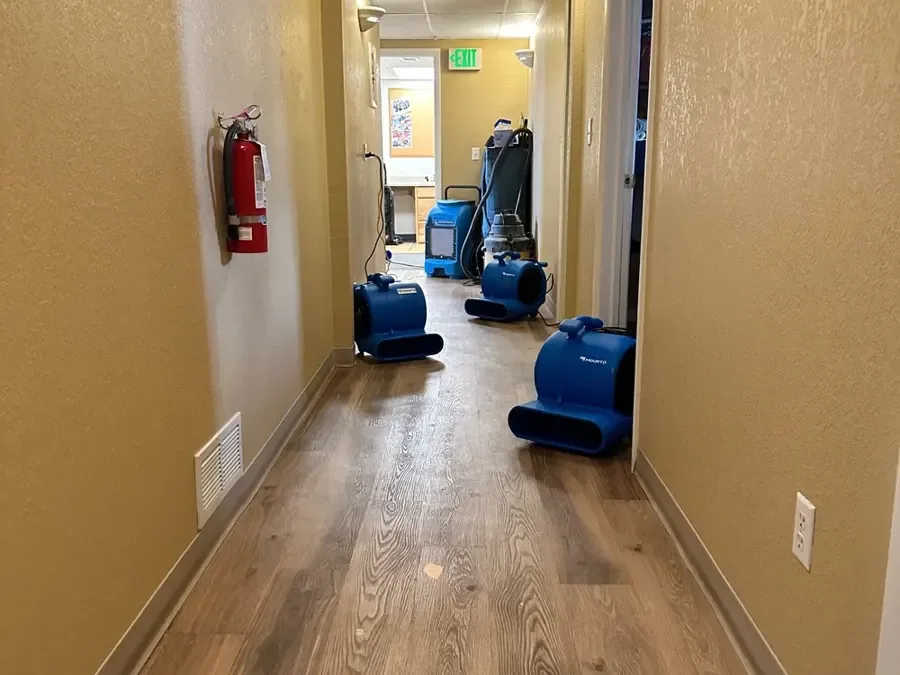
Air movers and dehumidifiers pull moisture out of materials the extractor cannot reach. Water extraction takes out the bulk, and drying handles what remains.
Readings are repeated until walls, floors and cabinets reach normal levels. The structural drying record also shows an adjuster that the space was dried to standard.
Garage walls that touch the slab pick up moisture from the floor. The base of the drywall is often cut a short way up to let it dry.
Cost and next steps
Cost depends on how far the water traveled and on what materials it touched. The water damage cost calculator gives a starting range before a site visit.
Once the space is dry, the new tank goes in, the Plumbing Final inspection is scheduled and repairs to drywall and flooring can begin.
Dry times depend on the materials. Drywall and cabinets take longer than a concrete floor, so the schedule is set room by room.
Questions
Can a leaking water heater be repaired?
A leak at a valve or fitting may be repaired. A leak from the tank body means the tank has failed and is replaced.
Who issues the permit in Ladera Ranch?
Ladera Ranch is unincorporated, so permits come from OC Development Services of Orange County.
What is the Plumbing Final?
It is the inspection that follows a water heater installation. It confirms the work and closes the permit.
Should cleanup wait until the new tank is installed?
No. Wet materials start to break down, so extraction and drying begin right after the supply is off.
Does water from a tank count as clean water?
Water from a supply tank starts clean, but it can pick up dirt and debris from floors and stored items as it spreads.
What is the first thing to do when a tank starts leaking?
Turn off the power or gas and close the cold water valve above the tank. Then move belongings away from the water.
Can stored items in the garage be saved?
Plastic and metal items usually can be dried and kept. Cardboard and paper that soaked up water are normally lost.