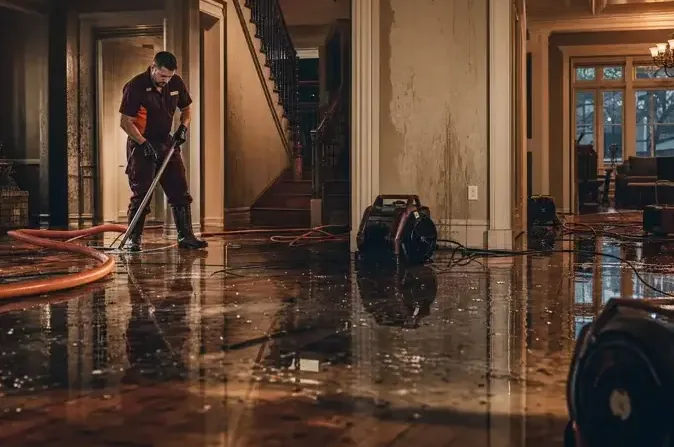
On March 24, 2023, a water main broke on Via Presa and flooded four homes. Residents were briefly evacuated while the break was dealt with.
Key takeaways
- A main break sends large volumes of water across yards and driveways, and some of it ends up inside the home.
- San Clemente has a history of main breaks, including one in March 2011 that flooded Pacific Coast Highway near Camino Capistrano.
- Reports of water leaks go to the City of San Clemente Utilities Division, which runs around the clock.
- Water that crosses soil and landscaping before entering a house is handled with more caution than a clean pipe leak.
- Extraction and structural drying are staged together so floors, walls and cabinets dry evenly.
What happened on Via Presa
The break flooded four homes and briefly forced evacuations. It is one of several local examples of how a failure in a public pipe can become a private water loss.
In March 2011, another main break flooded Pacific Coast Highway near Camino Capistrano and closed part of the road.
Events like these show that supply water can be a problem even when no pipe inside the house has failed. The cleanup is the same: remove the water and dry the structure.
Where San Clemente water comes from
The City of San Clemente Utilities Division supplies water to homes. The supply comes from local groundwater and imported water from the Metropolitan Water District of Southern California.
Some additional water comes from the Irvine Ranch Water District's Baker Water Treatment Plant.
Why the source does not change the cleanup
Whether a pipe is public or private, the water inside the house needs to come out and the structure needs to dry.
Responsibility for a public main sits with the utility, while the damage inside the home is what the restoration team handles.
Why water source questions come up
After a break, owners sometimes ask whether the water was clean. The utility and the restoration team look at the same question from different angles: where it came from and what it touched on the way in.
First steps when supply water enters a house
If water is entering from outside, the house is dealing with a flood rather than a plumbing leak. Safety comes before belongings.
The first actions are simple and quick:
Once the immediate danger passes, the household can start the record that a claim will need.
- Move people and pets away from the water and keep them out of wet rooms.
- Turn off electricity to flooded areas if it can be done safely.
- Report the main break to the City of San Clemente Utilities Division.
- Lift small items, electronics and papers above the water line.
- Photograph the water, the doors it came through and any damage.
Why water from outside is handled with caution
Supply water starts clean, but it picks up dirt, fertilizer, pet waste and other debris as it crosses yards, driveways and landscaping.
By the time it reaches a threshold, it is no longer the same as water from a kitchen faucet. Porous materials that soaked in it are often removed rather than saved.
Even a thin layer of water over a floor can soak into the base of walls. The visible water is only part of the story.
- Carpet and pad in the path of the water are usually discarded.
- Baseboards and the lower part of drywall are checked and opened.
- Hard floors can be cleaned and dried in place.
- Cabinets are checked for hidden moisture behind the toe kick.
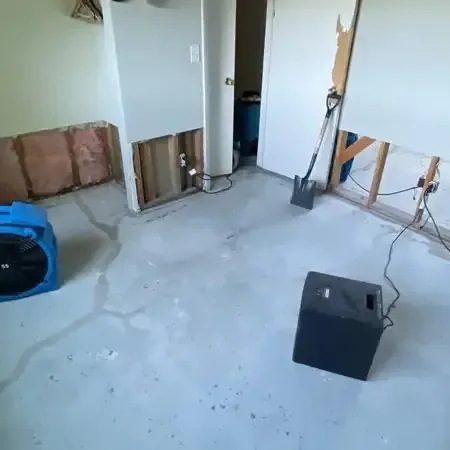
What a home looks like after a flood from outside
Water that enters at a door or a garage threshold tends to follow the lowest path. It runs across the floor, into closets and under walls.
That means damage can be hidden behind baseboards and inside cabinets long after the surface looks dry.
- Check inside closets, behind sofas and under beds for hidden water.
- Pull back a corner of carpet to see whether the pad is wet.
- Press on the bottom of drywall to see whether it feels soft.
- Look for water lines on walls, furniture and stored items.
- Keep a record of the rooms that were wet.
Garages and entry halls
These rooms take the water first. Stored items, shoe racks and boxes along the walls are often the first things lost.
Living areas and bedrooms
Water that moves farther into the home soaks carpet and wicks into the base of walls. Furniture legs can stain and swell.
How extraction and drying work together
The crew starts with water extraction, using pumps and wet vacuums to remove standing water.
Then structural drying begins. Air movers and dehumidifiers pull moisture from floors and wall bases, and readings are repeated until materials are dry.
Hard floors under thin layers of water can often be dried in place. Carpet and pad that sat in the water need a closer look.
Wet drywall is cut out only where readings show it will not dry in place. Keeping as much of the wall as possible saves time and repair costs.
Monitoring over several days
Moisture meters and a thermal camera show where water went. Equipment is adjusted as rooms dry.
Documenting the loss
Daily logs, photos and readings back up an insurance claim. They also show how the home was dried.
Working with the utility and the insurer
A public main break can involve both the utility and the homeowner's insurer. Photos, dates and the report number help both sides.
The San Clemente page lists the services available in town, from extraction to hardwood floor drying.
Insurers often want to see the first photos and the moisture log. Sending them promptly avoids delays in approving the work.
Keeping a claim file
A simple folder with photos, the report number, receipts and the moisture log keeps the claim organized. It also helps if more than one home on the street is affected.
Dates matter. Note when the break happened, when the water entered and when it was removed.
- Photos of the water and the damage.
- The utility report number.
- Moisture readings and equipment logs.
- Receipts for emergency costs.
Questions
What happened on Via Presa in March 2023?
A water main broke on March 24, flooded four homes and briefly evacuated residents.
Who should be told about a main break?
The City of San Clemente Utilities Division takes reports of water leaks around the clock.
Is water from a main break clean?
It starts clean, but it picks up contaminants as it crosses ground. Porous materials it soaks are often removed.
Can carpet be saved after supply water enters?
Sometimes, if the water was clean and the carpet is dried right away. Water that crossed a yard first is usually a removal case.
What does the restoration team do first?
Extract standing water, then take moisture readings and start structural drying.
Can a main break cause damage hours after the water stops?
Yes. Wet drywall, pad and framing keep holding moisture, and damage can continue until they are dried.
Are pets and children safe in the house after a main break?
They should stay out of wet rooms until the team has removed the water and treated the area.