Tile Roof Leak Water Damage in Coto de Caza, CA
Rain that gets past roof tile or flashing wets the attic first, then insulation, drywall and the ceiling below. The drying team opens the wet layers, removes what is soaked and dries the framing.
(888) 450-9281Roof dripping into the attic? Call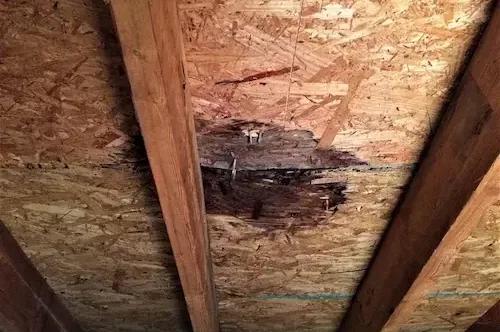
How tile roof leak water damage work is held to a standard
Dispatch around the clock
Active water is treated as urgent at any hour, weekends and holidays included, because every hour it sits it wicks higher into drywall and deeper into the slab.
Dried to IICRC S500
Air movers and LGR dehumidifiers are sized to the class of loss, and the equipment stays until wet materials read within 2 to 4 points of a dry reference.
A claim file built as it goes
Timestamped photos before any demolition, a moisture map, daily psychrometric logs and a line-item scope, organized the way an adjuster reads them.
Built for slab and stucco homes
Slab floors hide water under tile, stucco walls hold it in the bottom plate and upstairs baths drop it into the ceiling below. The meters go there first.
What to do right now about tile roof leak water damage
- Place buckets. Catch drips and move furniture out from under the stain.
- Release trapped water. If the ceiling bulges, poke a small hole at the lowest point over a bucket.
- Protect belongings. Cover furniture with plastic and lift rugs from the area below.
- Photograph the stain. Take dated photos of the stain and any attic moisture you can see safely.
What does tile roof leak water damage cost in Coto de Caza, CA?
In Coto de Caza, CA, drying after a roof leak usually costs $1,500 to $10,000 or more, depending on how much insulation and drywall got wet, how many rooms are below the leak and how long it ran before it was found.
One ceiling stain
- One ceiling area
- Wet insulation removed
- Short drying run
Room and attic
- Attic and room below
- Drywall cut open
- Several days of drying
Several rooms
- Multiple ceilings wet
- Larger removals
- Extended monitoring
What the claim file holds
Ranges are typical, not a quote: the water category, square footage, material class and how fast drying started move the number most. The file holds a moisture map, daily psychrometric logs, timestamped photos taken before demolition and a line-item scope. Sudden and accidental water is treated differently from flood, so check your own policy. For a closer range, run the water damage cost calculator.
How tile roof leak water damage is handled, start to finish
Find the wet area
Meters map the ceiling.
Open it up
Wet layers come out.
Dry the framing
Air movers run overhead.
Check readings
Moisture reads dry.
Rain rarely shows up where the roof is damaged. Water runs along rafters and drops through insulation before it stains a ceiling, so the visible spot can sit well away from the entry point. Roof leaks tend to appear after winter storms, and a community built in stages between 1986 and 2003 has roofs of many ages.
What gets wet above the ceiling
- Insulation absorbs water and stays wet long after the rain stops.
- Roof decking and rafters can darken and soften if they stay damp.
- Ceiling drywall sags or stains and may need to be cut open to dry.
- Wall tops below a leak can wick water downward into the room.
A roofer fixes the opening, and the drying team removes the moisture it let in.
Dry first, repair second
A temporary tarp from a roofer keeps more rain out while the structure dries. Drying equipment is set once the roof is sealed, with air directed into the opened ceiling and attic so the framing dries fully before drywall is replaced.
After the storm passes
Look in the attic for damp insulation after any heavy rain. For stains already showing below, see ceiling leak damage, and for the full drying process read about structural drying.
Tile roof leak water damage across Coto de Caza and nearby communities
Roof leak work spans homes from the 1986 opening through completion in 2003 across the Village, Los Ranchos Estates and the CZ Master Association, so the age and condition of each roof vary.
The same service nearby: tile roof leak water damage in Ladera Ranch, Las Flores, Rancho Santa Margarita.
Water damage restoration in Coto de Caza › Every community covered ›Related water damage services in Coto de Caza
Tile Roof Leak Water Damage questions, answered
Still dealing with it?
Rain came through the roof? The drying team opens the ceiling and dries the attic.
(888) 450-9281 Reach the roof leak crewWhy does the stain appear away from the roof leak?
Water runs along rafters and insulation before it drips through, so the stain can sit well away from where it entered. Meters trace the path back to the source.
Does wet attic insulation have to be replaced?
Usually yes. Insulation that soaks up water stays wet, loses its value and holds moisture against framing, so wet sections are removed and replaced after drying.
Can a leaking roof cause mold?
It can, because attics stay warm and closed. Wet insulation and decking that stay damp for more than a day or two invite growth, which is why fast drying matters.
Who repairs the roof and who dries the ceiling?
A roofer repairs the roof, and the drying team handles the wet materials inside. Both trades work in order so the roof is sealed before the structure is closed up.
Is a roof leak covered by insurance?
Sudden storm damage is often covered, while wear and neglect usually are not. Photos, moisture readings and a written scope help the adjuster decide what the policy covers.
When do roof leaks usually show up here?
After winter storms, when long rain finds worn flashing, cracked tile or aging seams. Checking the attic after heavy rain catches small leaks before ceilings stain.
Ceiling stained after a storm? Start the dry-out.
Wet insulation and drywall keep holding water long after the rain stops. The crew finds every wet layer and dries it before anything is closed up.
(888) 450-9281Call about the attic leak