Structural Drying and Dehumidification in Las Flores, CA
Condos share walls and floors with neighbors, so structural drying can involve more than one unit, and walls, subfloors and framing are dried with air movers and dehumidifiers until readings are normal in each room.
(888) 450-9281Dry the walls and subfloor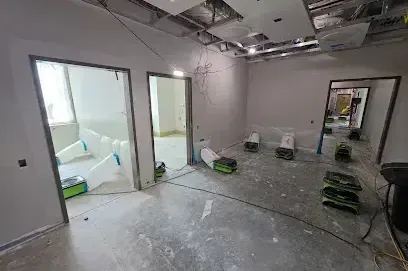
How structural drying and dehumidification work is held to a standard
Dispatch around the clock
Active water is treated as urgent at any hour, weekends and holidays included, because every hour it sits it wicks higher into drywall and deeper into the slab.
Dried to IICRC S500
Air movers and LGR dehumidifiers are sized to the class of loss, and the equipment stays until wet materials read within 2 to 4 points of a dry reference.
A claim file built as it goes
Timestamped photos before any demolition, a moisture map, daily psychrometric logs and a line-item scope, organized the way an adjuster reads them.
Built for slab and stucco homes
Slab floors hide water under tile, stucco walls hold it in the bottom plate and upstairs baths drop it into the ceiling below. The meters go there first.
What to do right now about structural drying and dehumidification
- Map the moisture. Meters and a thermal camera mark every wet wall, floor and ceiling.
- Place equipment. Air movers and dehumidifiers are set according to the moisture map.
- Recheck daily. Readings are taken each visit and equipment is moved as areas dry.
- Confirm dry. Equipment comes out only when materials match dry reference readings.
What does structural drying and dehumidification cost in Las Flores, CA?
Drying one or two rooms commonly costs $1,500 to $3,500, and the cost rises with the number of rooms, the equipment days and dense materials such as concrete and thick framing.
One or two rooms
- Equipment placed
- Daily readings
- Short drying run
Several rooms
- More equipment
- Wall cavities vented
- Longer drying
Dense materials
- Concrete and framing
- Desiccant options
- Extended drying
What the claim file holds
Ranges are typical, not a quote: the water category, square footage, material class and how fast drying started move the number most. The file holds a moisture map, daily psychrometric logs, timestamped photos taken before demolition and a line-item scope. Sudden and accidental water is treated differently from flood, so check your own policy. For a closer range, run the water damage cost calculator.
How structural drying and dehumidification is handled, start to finish
Map
Meters find every wet surface.
Place
Equipment is set from the map.
Check
Readings are taken each visit.
Finish
Equipment leaves when materials are dry.
Structural drying begins after the water is extracted and the damaged materials are removed, because wet framing and subfloors keep water long after the surface looks dry. The crew places air movers and dehumidifiers from a moisture map, checks readings on each visit and moves equipment as areas dry. The goal is to bring wood, drywall and concrete back to normal moisture levels so mold and warping do not follow.
How equipment is placed
Placement follows the map, not guesswork.
- Air movers push dry air across wet walls and floors from a set angle.
- Dehumidifiers pull moisture from the air so the materials can release more.
- Wall cavities are opened or ventilated where drywall holds water.
- Equipment is moved and the settings are adjusted as readings fall.
Daily records show how the drying progressed and when each room was finished.
Shared walls in condos
Condo buildings share walls, floors and ceilings with neighbors, so water in one unit can be in the next. The drying team checks adjoining spaces and may need to coordinate with the building manager before equipment is set in a shared wall.
When drying is finished
Equipment stays until the readings match dry reference materials, not until the surface feels dry. The record helps the insurer and the contractor who rebuilds. See water extraction, hardwood floor drying or the main drying service.
Structural drying and dehumidification across Las Flores and nearby communities
Structural drying covers Las Flores single-family neighborhoods and condo buildings near Oso Parkway and Antonio Parkway, including Bel Flora, Traditions, SeaCountry and Wyngate, at ZIP code 92688 in Orange County.
The same service nearby: structural drying and dehumidification in Ladera Ranch, Coto de Caza, Rancho Santa Margarita.
Water damage restoration in Las Flores › Every community covered ›Related water damage services in Las Flores
Structural Drying and Dehumidification questions, answered
Still dealing with it?
Walls still damp after the cleanup? The drying team measures before it removes equipment.
(888) 450-9281 Ask about shared wall dryingWhat is structural drying?
It is the process of drying walls, subfloors and framing with air movers and dehumidifiers after the standing water has been removed.
Why does drying take several days?
Wood and concrete release water slowly, so equipment runs until the materials match dry reference readings, not just until they feel dry.
Is a dehumidifier enough?
No. Air movers push moisture off surfaces and dehumidifiers remove it from the air, and the two work together.
How does drying work in a condo?
Shared walls and floors may hold water for neighbors too, so adjoining spaces are checked and the building manager is often involved.
Can drying start before repairs?
Yes, and it should. Repairs follow once readings are normal, since closing wet walls traps moisture.
Does Las Flores insurance pay for drying?
Mitigation for a covered loss is often included. The daily records and final readings help the adjuster process the claim.
Dry the structure and prove it
Describe the rooms that were wet and how long ago, and the crew will explain how the structure is dried and then checked.
(888) 450-9281Call to dry the structure