Water Extraction and Removal in Las Flores, CA
Standing water in a home or condo is pumped and wanded out first, then moisture mapping tracks the water that wicked into walls, cabinets and flooring beyond the wet spot.
(888) 450-9281Get a crew pumping out the room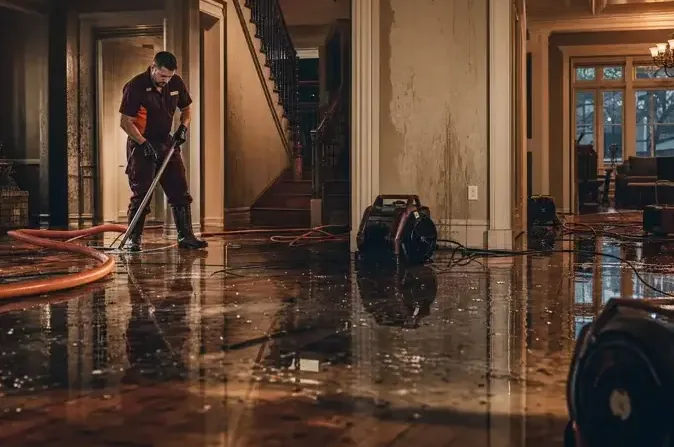
How water extraction and removal work is held to a standard
Dispatch around the clock
Active water is treated as urgent at any hour, weekends and holidays included, because every hour it sits it wicks higher into drywall and deeper into the slab.
Dried to IICRC S500
Air movers and LGR dehumidifiers are sized to the class of loss, and the equipment stays until wet materials read within 2 to 4 points of a dry reference.
A claim file built as it goes
Timestamped photos before any demolition, a moisture map, daily psychrometric logs and a line-item scope, organized the way an adjuster reads them.
Built for slab and stucco homes
Slab floors hide water under tile, stucco walls hold it in the bottom plate and upstairs baths drop it into the ceiling below. The meters go there first.
What to do right now about water extraction and removal
- Call and describe. Name the source, the wet rooms and the water type so the right pumps are loaded.
- Extract the water. Pumps and wands pull standing water, and soaked pad and loose materials are removed.
- Map the moisture. Meters and a thermal camera show wet walls, cabinet bases and subfloors the eye misses.
- Hand off to drying. Air movers and dehumidifiers take over once the standing water and damaged materials are out.
What does water extraction and removal cost in Las Flores, CA?
Extraction alone usually runs $1,200 to $3,000 for one room of clean water, with larger or dirtier jobs costing more because removal and surface treatment are added to the scope.
One room, clean water
- Pump-out of standing water
- Moisture mapping
- First drying setup
Several rooms
- Extraction in each room
- Pad and baseboard removal
- Extended drying
Gray or storm water
- Contaminated water removal
- Surface treatment
- Longer drying
What the claim file holds
Ranges are typical, not a quote: the water category, square footage, material class and how fast drying started move the number most. The file holds a moisture map, daily psychrometric logs, timestamped photos taken before demolition and a line-item scope. Sudden and accidental water is treated differently from flood, so check your own policy. For a closer range, run the water damage cost calculator.
How water extraction and removal is handled, start to finish
Assess
The crew checks water type, power and the wet area.
Extract
Standing water is pumped and wanded out.
Map
Meters trace moisture into walls and floors.
Dry
Equipment is placed and rechecked on each visit.
Extraction is the work that decides how large a water loss becomes. In a home or condo in Las Flores, the extraction crew pulls standing water off floors first, because the longer water sits the more it moves into baseboards, cabinet bases, wall bottoms and subfloors. Once the surface water is gone, moisture meters and a thermal camera show where it traveled, and that map sets the drying plan. Quick extraction also limits the chance of mold taking hold.
What the extraction crew does first
The first visit follows a set order of work.
- Pumps and extraction wands remove standing water from hard floors, carpet and the edges of rooms.
- Carpet pad and other soaked materials that cannot dry in place are cut out and bagged.
- Cabinet bases and baseboards are checked for water trapped behind them.
- Moisture readings are logged so drying equipment can be placed in the right spots.
Clean water can often be dried in place, while gray or storm water changes the scope.
Why condos need extra care
Condo buildings in the community share walls, ceilings and floors, so water pulled from one unit may have started in another or may be heading into one. The extraction crew checks adjoining walls and the cavity above or below the wet area, and notes anything that suggests a neighbor's unit is involved so the building manager can be told. Single-family homes get the same wall-bottom and subfloor checks.
When the water type changes the plan
Water from a supply pipe or an appliance is usually clean at first, but it turns gray as it sits. Sewage and storm runoff are contaminated from the start, and that means more removal and surface treatment before drying. The sewage backup cleanup work follows stricter steps than a simple pull-out, and the local service hub lists each type.
Water extraction and removal across Las Flores and nearby communities
Extraction crews work throughout Las Flores, from the single-family streets to the condo buildings near Oso Parkway and Antonio Parkway, including Avelino, Sundance, Veranda and SeaCountry. Addresses use ZIP code 92688.
The same service nearby: water extraction and removal in Ladera Ranch, Coto de Caza, Rancho Santa Margarita.
Water damage restoration in Las Flores › Every community covered ›Related water damage services in Las Flores
Water Extraction and Removal questions, answered
Still dealing with it?
Standing water in the house? The extraction crew starts with the wet floor.
(888) 450-9281 Ask about pumping outHow quickly should extraction start?
As early as possible. Water moves into baseboards and subfloors fast, and mold can start within the first couple of days, so pulling the water out early shrinks the later drying work.
Can a wet vacuum replace extraction?
A household wet vacuum clears a small spill, but it cannot reach water in cabinet bases, under flooring or inside wall bottoms, which is why crews use pumps, wands and meters.
Is carpet always thrown away?
Not always. Carpet that got clean water can sometimes be lifted and dried, while the pad usually goes. Carpet soaked by gray or contaminated water is normally removed.
Does extraction work in a condo?
Yes, with extra checks. The crew looks at shared walls and the ceiling below or the floor above, since water in a Las Flores condo often reaches a neighbor's space.
What is left after the standing water is gone?
Water held in walls, subfloors and cabinet bases. Moisture mapping finds it, and air movers and dehumidifiers then dry what extraction could not reach.
How is the extraction cost set?
By the size of the wet area, how long the water sat and the water type. Clean one-room jobs cost far less than storm water or a long-running leak across several rooms.
Pull the water out before it spreads
Describe the wet rooms and the water type, and the crew will explain how extraction and drying would run.
(888) 450-9281Call and start pumping